


Autoimmune Diseases
Autoimmune diseases are a diverse group of chronic conditions that are often debilitating and have no known cure.1–3
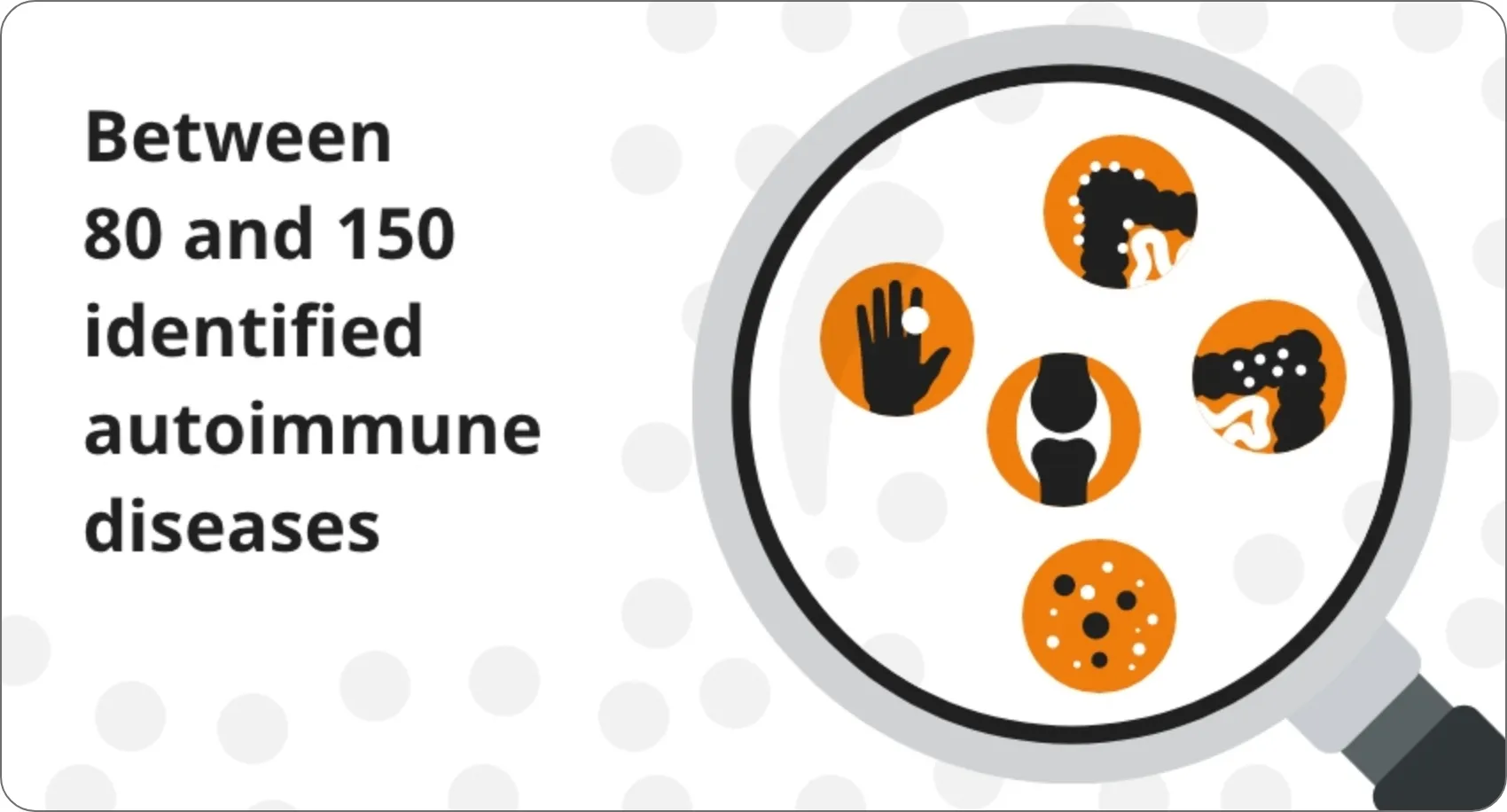
There are currently between 80 and 150 identified autoimmune diseases, including plaque psoriasis, psoriatic arthritis, rheumatoid arthritis (RA), Crohn’s disease and ulcerative colitis, to name but a few.2–4
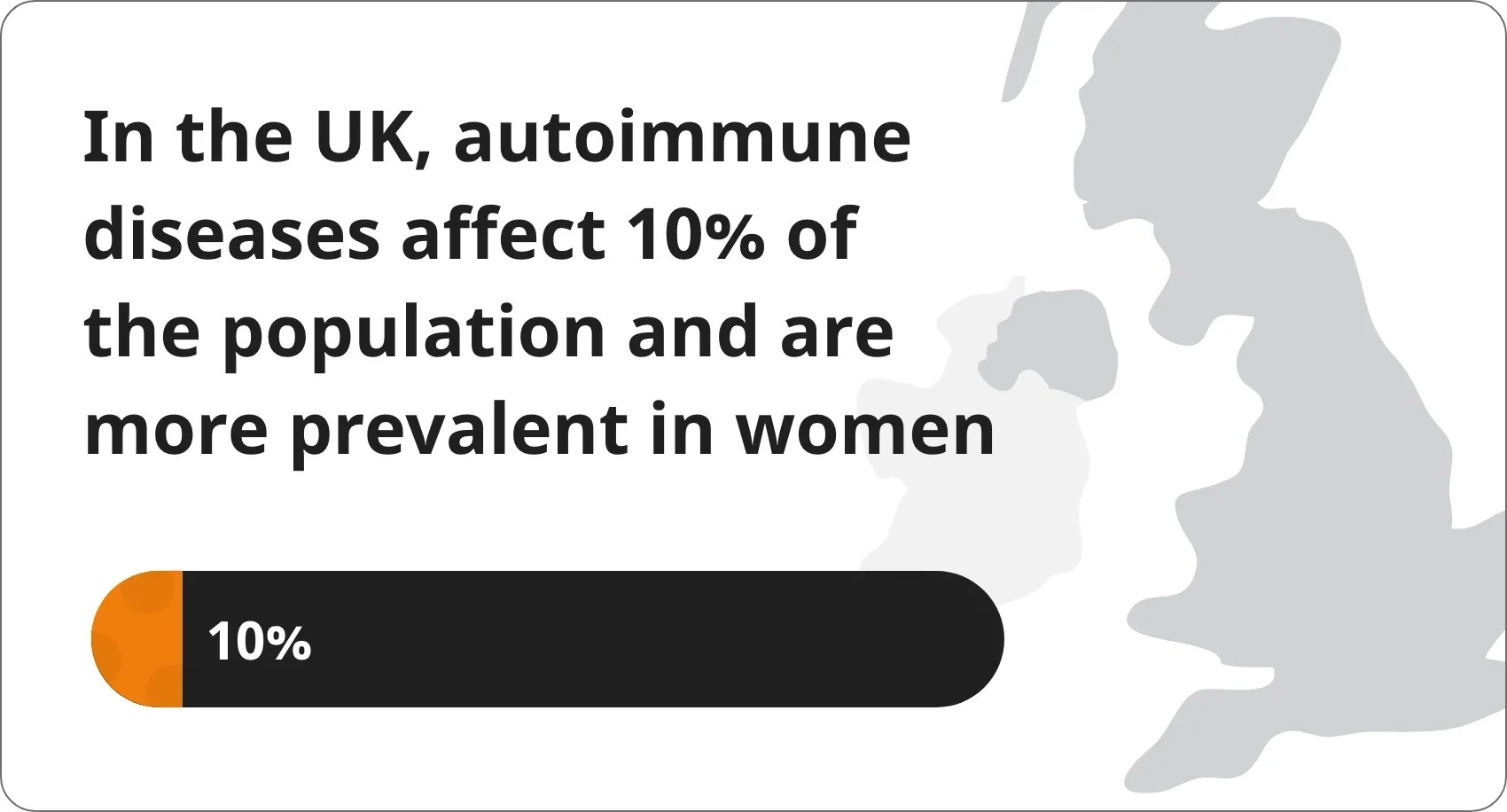
In the United Kingdom (UK), a study including 22 million people found that autoimmune diseases affect 10% of the population and are more prevalent in women (13.1%) compared to men (7.4%).5
Impact on patients
The manifestations and consequences of autoimmune diseases vary depending on the target organs or systems.
It is important to view the effects of autoimmune diseases not just through a lens directed at physical health, but through one that also views elements such as normal social interaction and development, mental health, the ability to gain an education and pursue employment, and the capacity to have children – all of which can affect quality of life.3
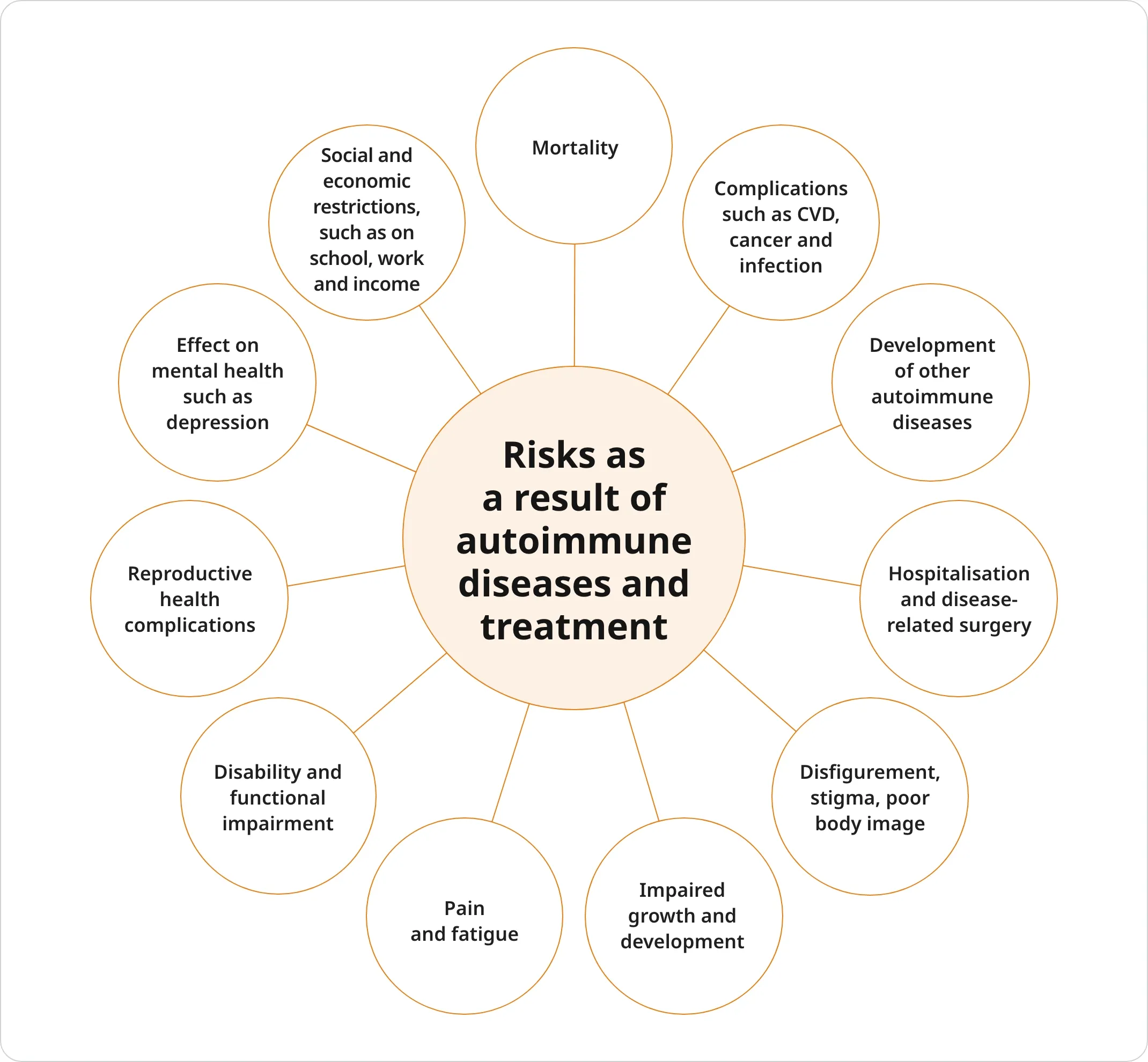
Adapted from Committee for the Assessment of NIH Research on Autoimmune Diseases. 2022.3

Skeletal health complications, such as osteoporosis, are common comorbidities associated with chronic inflammation and autoimmune conditions, and potentially contribute to disability and functional impairment7,8
For example, patients with RA are reported to have a…

2-fold
Increased risk of developing osteoporosis

2–6 fold
Increased risk of incurring a vertebral fracture

2–3 fold
Increased risk of suffering a hip fracture
…when compared to the general population.7
Chronic inflammation associated with autoimmune diseases can damage bone and reduce bone density, making patients more prone to fracture.8
This is because the immune system and the skeletal system share regulatory mechanisms and progenitor molecules. For example, the maintenance of bone homeostasis is reliant on the balanced activity of osteoblasts and osteoclasts, which are locally regulated by B-cells and T-cells.8–10
As a consequence, pathophysiological events affecting the immune system can translate into disruptions in bone homeostasis, contributing to bone loss and the development of osteoporosis.9,10
Osteoporosis in RA
Pietschmann, et al. (2022) proposed a model that explores the pathophysiology of osteoporosis in RA, accounting for how autoimmune inflammatory processes can impact bone remodelling and subsequent fracture risk.6
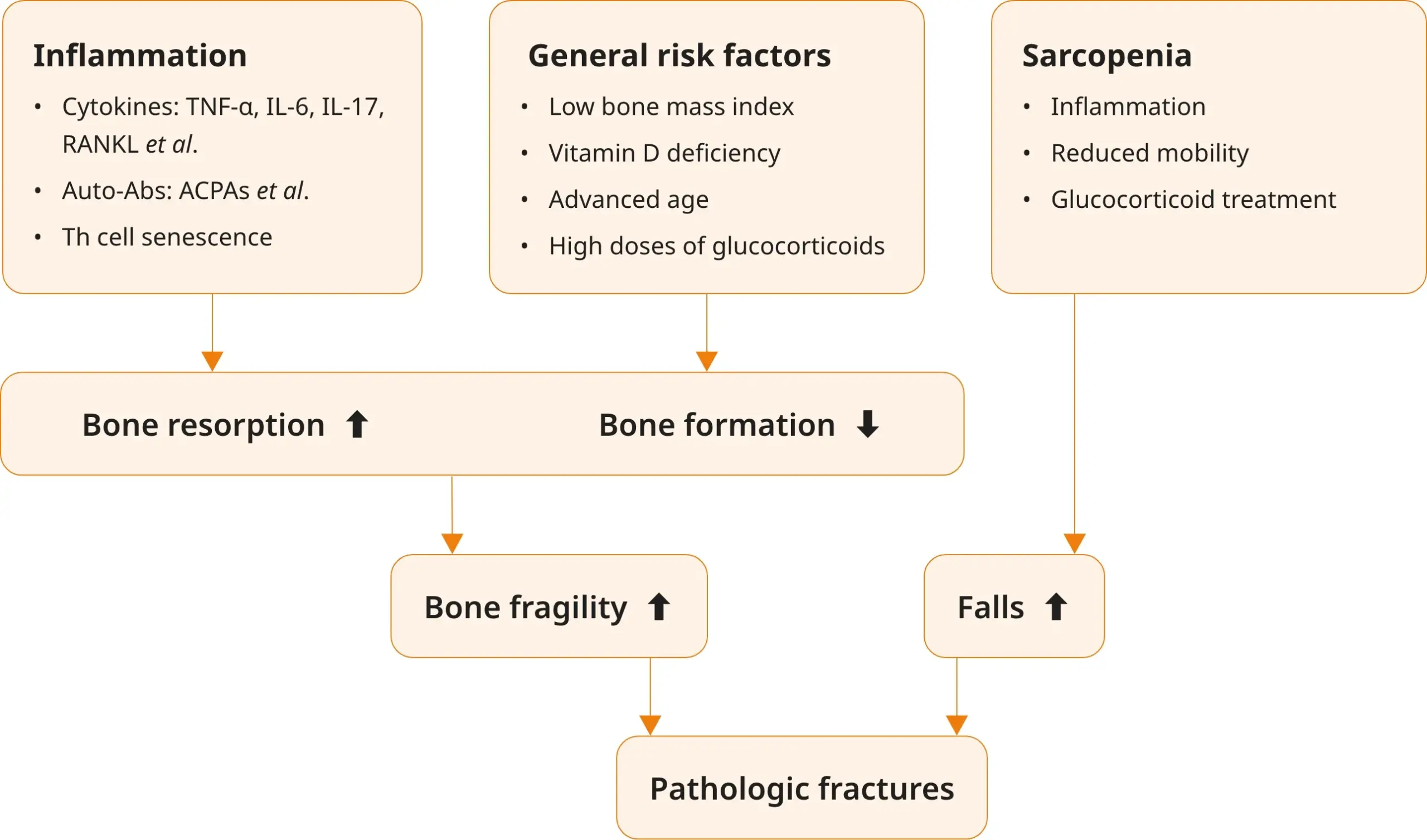
Adapted from Pietschmann, et al. (2022).6
Treatment of autoimmune conditions
Medical treatment of autoimmune diseases generally includes:

Disease-modifying therapy (DMT)
Designed to stop or slow the underlying disease pathology by interfering with critical pathways in the inflammatory cascade.11

Immune suppression
Such as nonsteroidal anti-inflammatories, steroids, or aminosalicylates may be considered prior to or to complement DMT.12–15

Symptomatic treatments
For example, analgesics for rheumatic pain, emollients to help moisturise psoriatic skin and antimotility medicines for diarrhoea in inflammatory bowel disease (IBD).12,16,17
Since autoimmune diseases vary widely, treatments should be tailored per relevant guidelines and to the patient’s specific condition and needs
Understanding patient motivators of treatment
Thematic analysis of 152 patients living with autoimmune conditions across the globe reveals that treatment motivators are varied and can be spread across three main themes:18

Approach
A desire to achieve positive outcomes.

Avoidance
A desire to avoid adverse or negative consequences.

Assertion
A desire to maintain control, independence and identity.
Understanding a patient’s priorities and including them in treatment decisions could help maximise adherence, satisfaction and clinical outcomes.19,20
Accord is committed to keeping patients at the heart of treatment
Watch Julia Jones (Director – Autoimmune & CNS (EMENA Region), Accord Healthcare) talk about Accord’s promise to improve patient care in autoimmune conditions.
Approx watch time 2 mins.


Duration : 02:01 min
Did you know?
Accord plays a pivotal role in the NHS, supplying 1 in 9 of all the UK’s medicines21
Watch this exclusive sneak peek of ‘Disease modifying-antirheumatic drugs guidelines: a focus on methotrexate guidance in clinical practice’.
Approx watch time 1 min.
Duration : 01:29 min
Want to learn more about autoimmune diseases and their treatment?
Discover on-demand webinar videos, where experts discuss autoimmune treatment and care
Continue your journey with Accord
ACPA, anti-citrullinated protein antibodies; Ab, antibody; CVD, cardiovascular disease; CNS, central nervous system; DMT, disease-modifying therapy; EMENA, Europe, Middle East and North Africa; IBD, inflammatory bowel disease; IL, interleukin; NHS, National Health Service; NIH, National Institutes of Health; RA, rheumatoid arthritis; Th, T helper; TNF-α, tumour necrosis factor-alpha; UK, United Kingdom.
References:
- Pisetsky DS. Nat Rev Nephrol. 2023;19(8):509–524.
- National Institute of Allergy and Infectious Diseases. Autoimmune Diseases. 2025. Available from: https://www.niaid.nih.gov/diseases-conditions/autoimmune-diseases Accessed: November 2025.
- Committee for the Assessment of NIH Research on Autoimmune Diseases. Background on Autoimmune Diseases. 2022. Available from: https://www.ncbi.nlm.nih.gov/books/NBK605884/ Accessed: November 2025.
- Fugger L, et al. Cell. 2020;181(1):63–80.
- Conrad N, et al. Lancet. 2023;401(10391):1878–1890.
- Pietschmann P, et al. Int J Mol Sci. 2022;23(15):8740.
- Kamen DL & Alele JD. Curr Opin Endocrinol Diabetes Obes. 2010;17(6):540–545.
- Schett G & David JP. Nat Rev Endocrinol. 2010;6(12):698–706.
- Iseme RA, et al. Bone Rep. 2017;7:121–131.
- Weitzmann MN. Curr Opin Endocrinol Diabetes Obes. 2014;21(6):461–467.
- Benjamin O, et al. Disease-Modifying Antirheumatic Drugs (DMARD). July 2023. Available from: https://www.ncbi.nlm.nih.gov/books/NBK507863/ Accessed: November 2025.
- National Institute for Health and Care Excellence. Rheumatoid arthritis in adults: management [NG100]. October 2020. Available from: https://www.nice.org.uk/guidance/ng100 Accessed: November 2025.
- National Institute for Health and Care Excellence. Psoriasis: assessment and management [CG153]. September 2017. Available from: https://www.nice.org.uk/guidance/cg153 Accessed: November 2025.
- National Institute for Health and Care Excellence. Crohn’s disease: management [NG129]. May 2019. Available from: https://www.nice.org.uk/guidance/ng129 Accessed: November 2025.
- National Institute for Health and Care Excellence. Ulcerative colitis: management [NG130]. May 2019. Available from: https://www.nice.org.uk/guidance/ng130 Accessed: November 2025.
- National Health Service. Psoriasis: Treatment. April 2022. Available from: https://www.nhs.uk/conditions/psoriasis/treatment/ Accessed: November 2025.
- Crohn’s & Colitis UK. Other treatments. December 2023. Available from: https://crohnsandcolitis.org.uk/info-support/information-about-crohns-and-colitis/all-information-about-crohns-and-colitis/treatments/other-treatments Accessed: November 2025.
- Atlantis Health. Global Immunology Patient Study: Patient motivators to support treatment engagement. Available from: https://atlantishealth.com/uk/newsand-publications/global-immunology-patient-study-patient-motivators-to-support-treatment-engagement/ Accessed: November 2025.
- Belinchón I, et al. Patient Prefer Adherence. 2016;10:2357–2367.
- Song K, et al. World J Gastroenterol. 2022;28(26):3092–3100.
- Accord Healthcare. Medicine Portfolio. Available from: https://www.accord-healthcare.com/uk/medicine-portfolio Accessed: 21. November 2025.


Job Code: UK-Gen-Deno-01421 | Date of preparation: November 2025